YourLoveCode Manifest
New Paradigm: How Couples Enter Relationships in the 21st Century
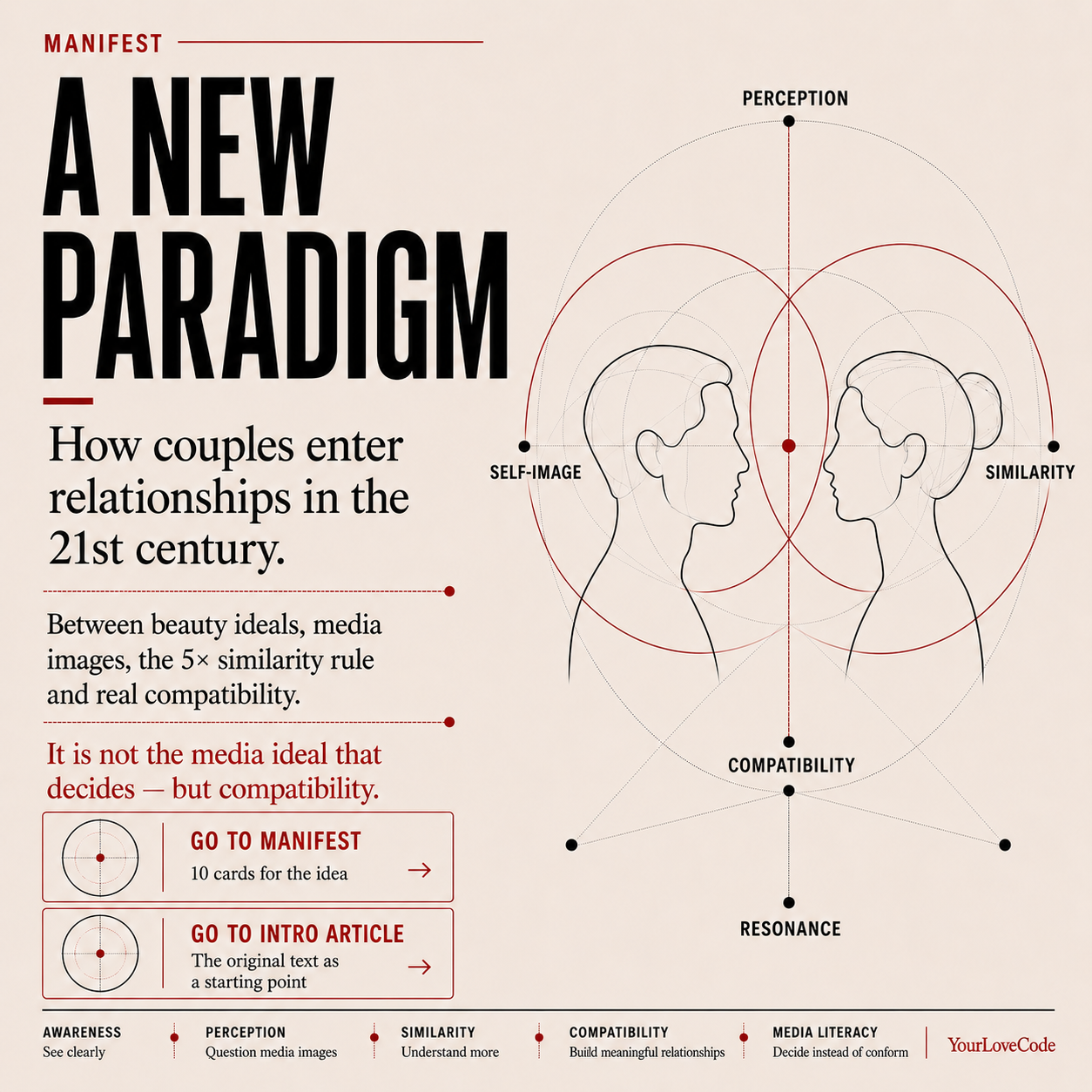
A manifest about beauty ideals, media images, self-image, the 5× similarity rule and real compatibility.
Go to the Manifest
Read the Source Article
Context
Why this manifest matters
This article is not a classic relationship guide. It is an attempt to reassess the effect of media-defined beauty ideals on self-image, partner choice and social perception.
YourLoveCode asks whether we should still explain partner formation in the 21st century through images — or whether we should begin to understand the deeper mechanism behind it.
The central thesis: Real partner formation does not simply follow the media image. It emerges through the interaction of similarity, compatibility, resonance, synchronicity, context and time.
10 cards · 10 core ideas
The manifest in 10 graphics
The following 10 graphics condense the argument of the source article: media, self-image, standard, similarity, compatibility and media literacy.
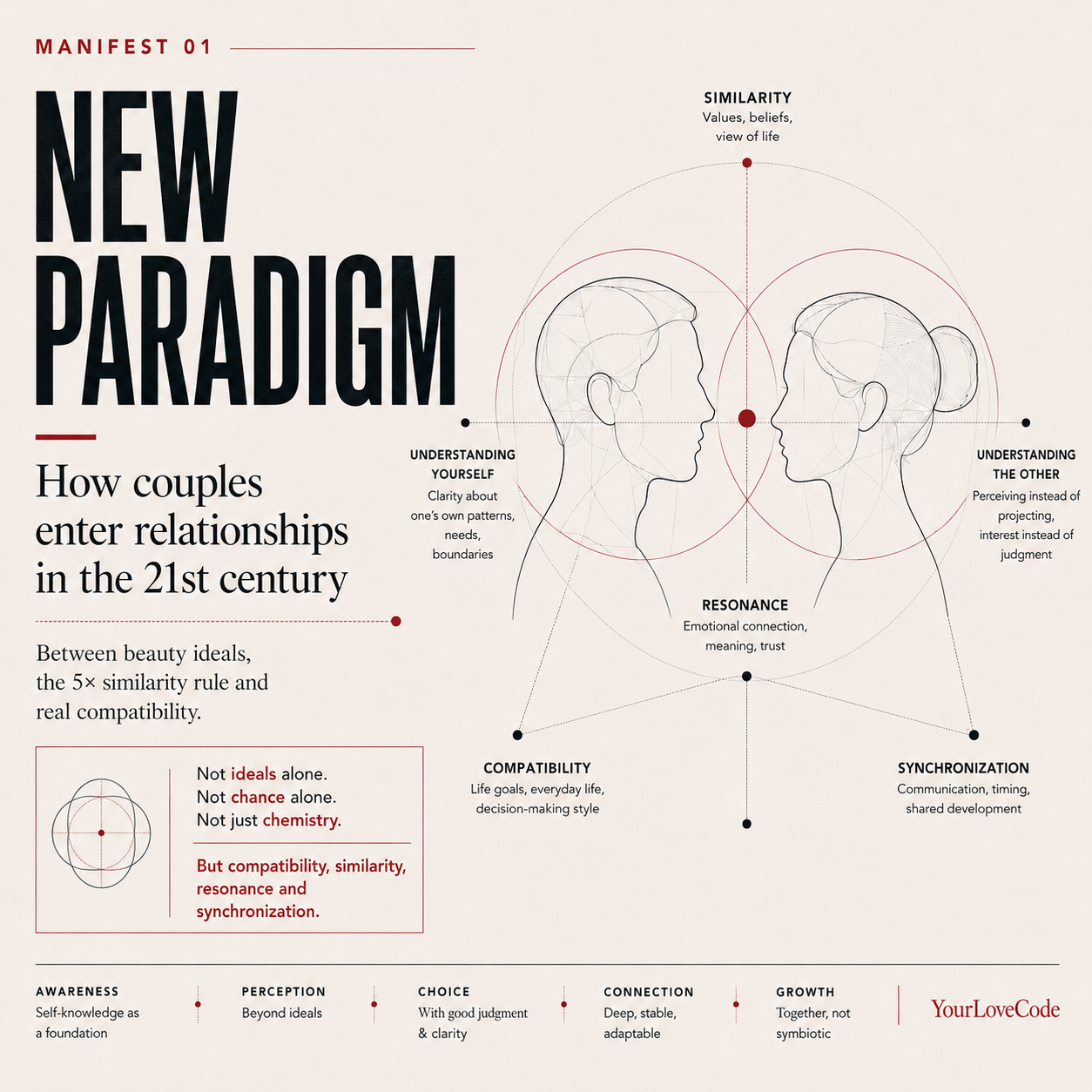
New Paradigm
The new paradigm begins with a shift in perspective: partner formation cannot be explained by visibility, attractiveness ideals or cultural narratives alone.
YourLoveCode reads relationship as an interaction of media image, self-image, similarity, compatibility and resonance. The decisive sentence is: It is not the media ideal that decides — but compatibility.
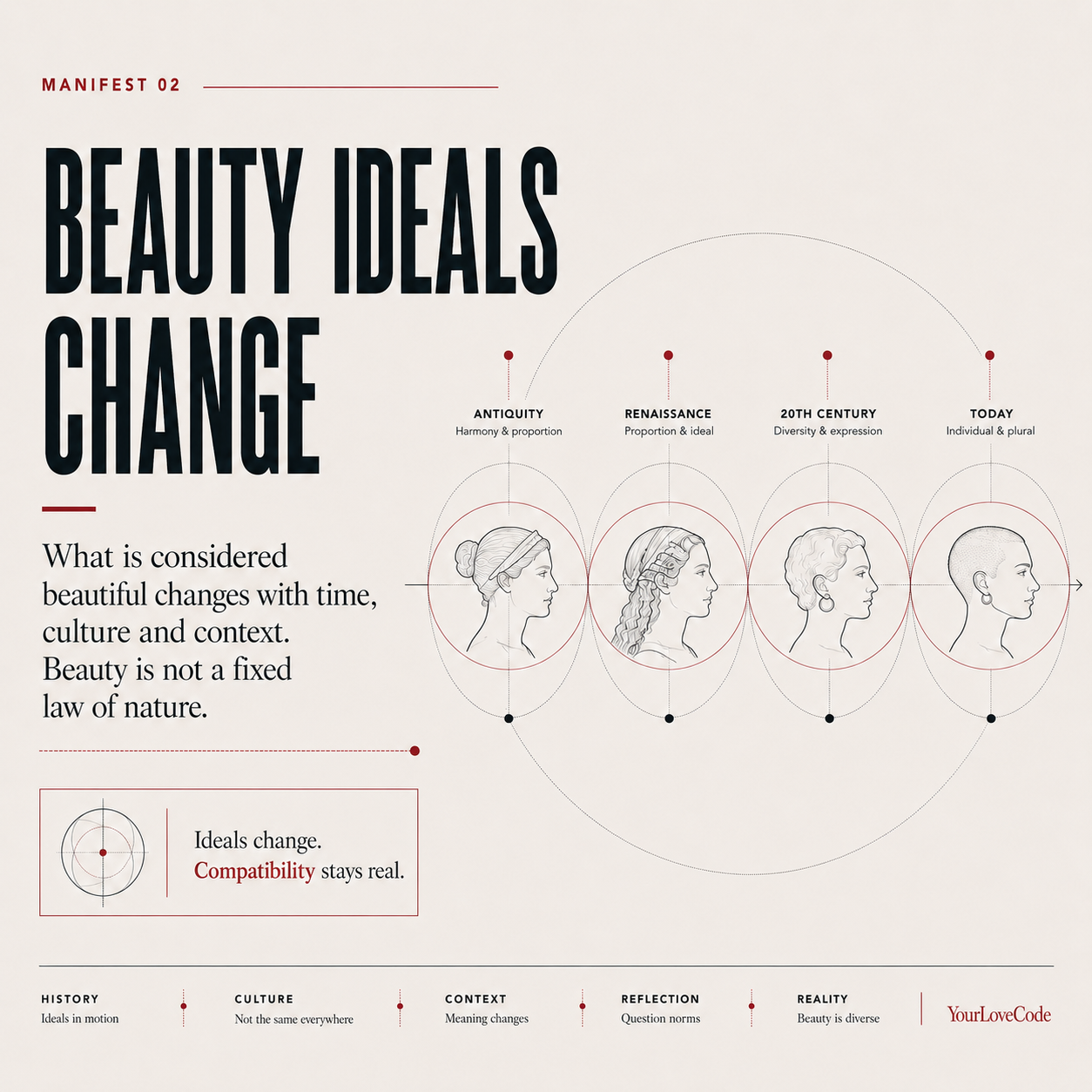
Beauty ideals are changeable
Beauty ideals are not a timeless truth. They change with culture, era, media and social expectation.
When a changing ideal appears as a general standard, a problem arises: people begin to measure themselves against images that are themselves only products of their time.
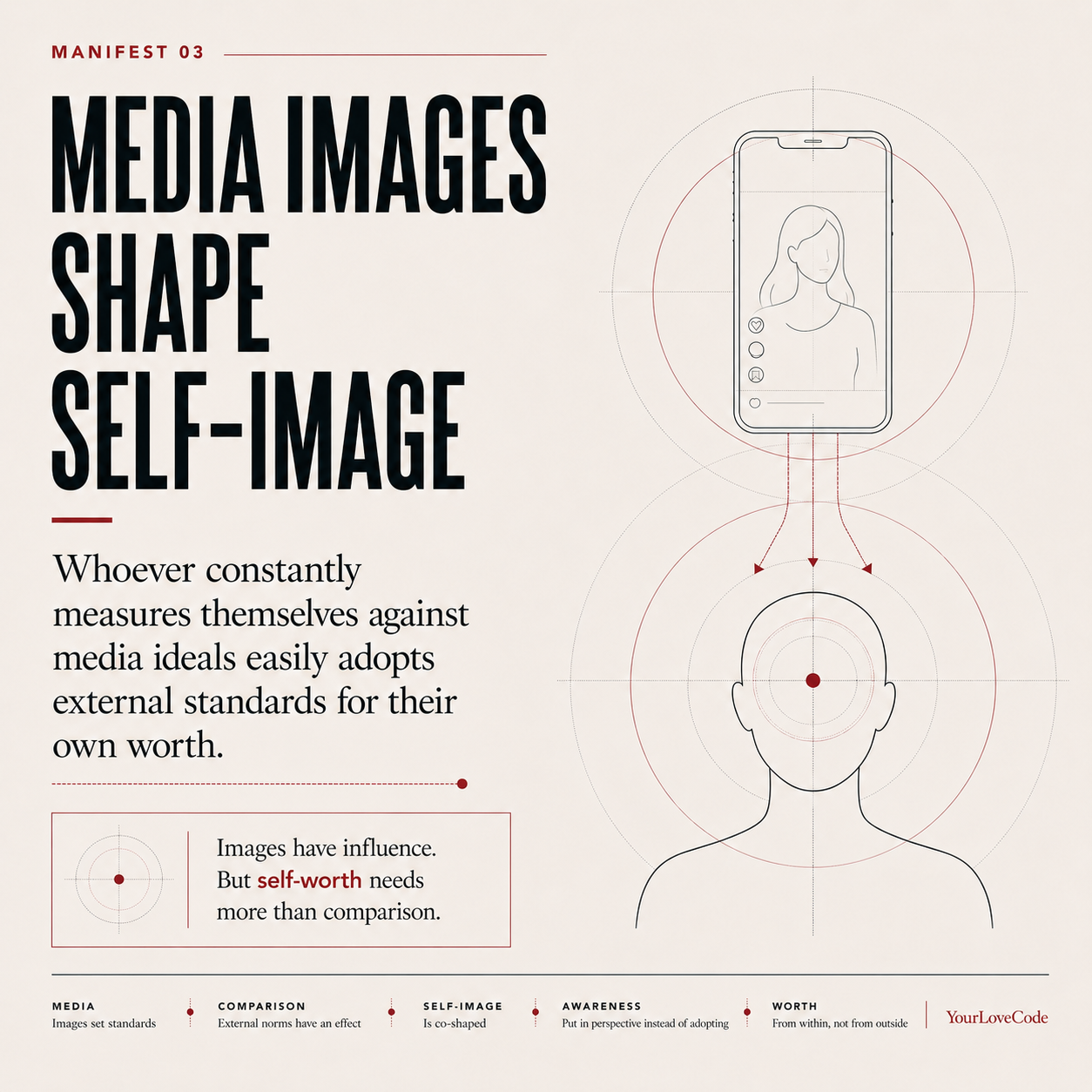
Media images shape self-image
Media images do not remain outside the human being. They shape how we see ourselves, how we judge others and which form of relationship we consider possible.
Especially for young people, this comparison can become an inner standard before a stable self-image has been able to form.
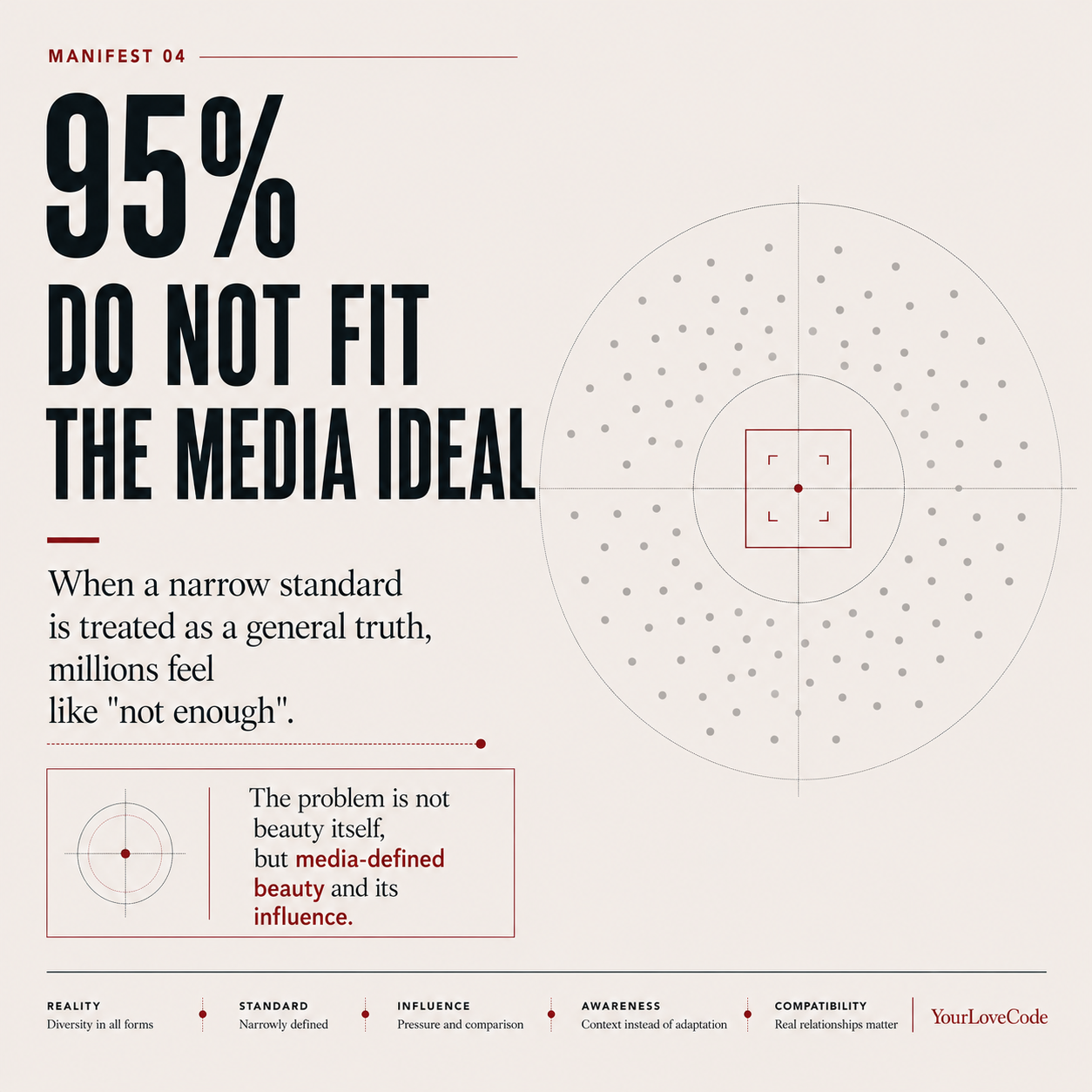
95% do not fit the media ideal
When a narrow media standard is treated as a general truth, millions of people feel “not enough”.
The central point is not to devalue beauty. The problem is the effect of a media-defined beauty when it is understood as a standard for real partner formation.
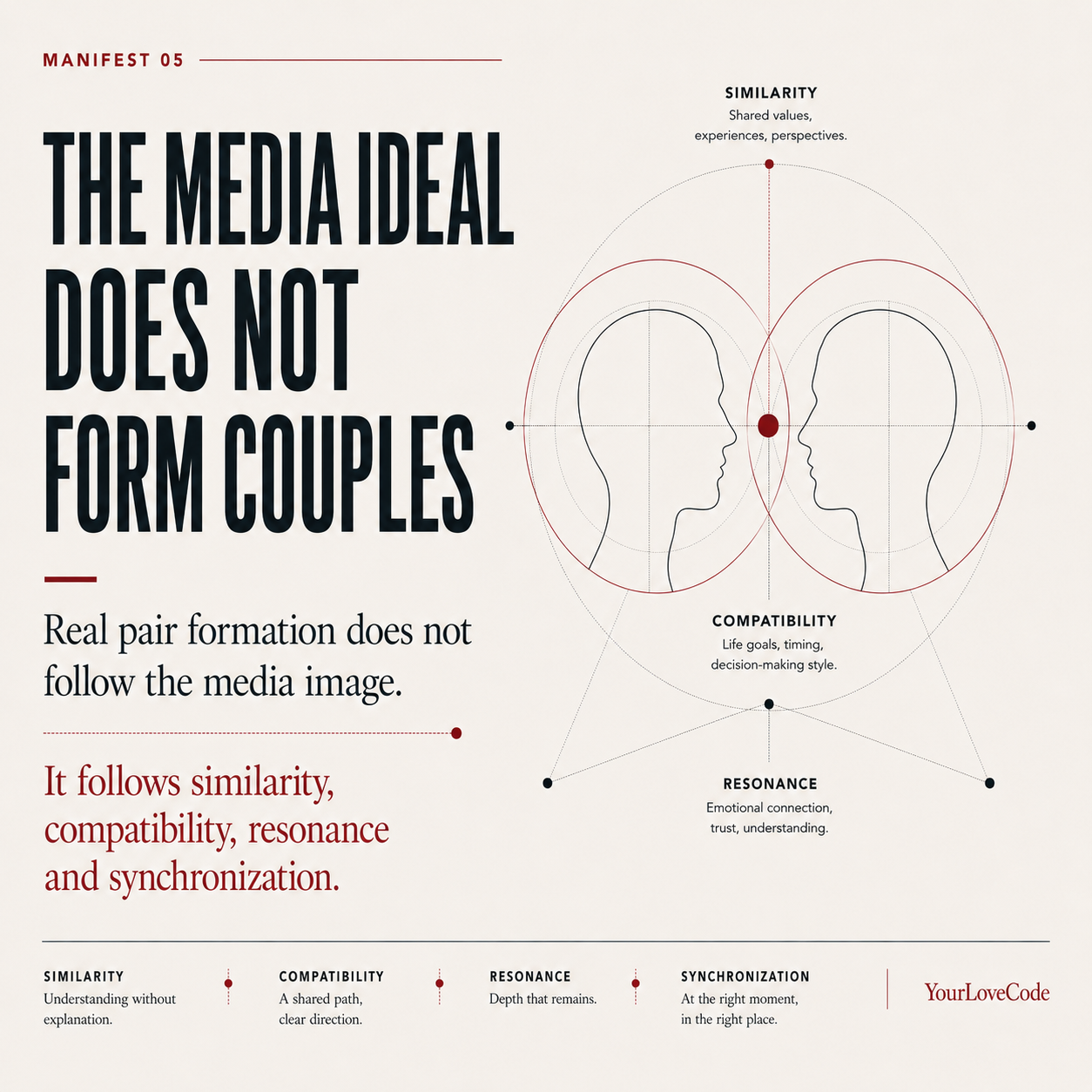
The media ideal does not form couples
Real partner formation does not simply follow the media image.
People do not find each other because they correspond to a public ideal, but because similarity, compatibility, resonance and synchronicity interact on several levels.
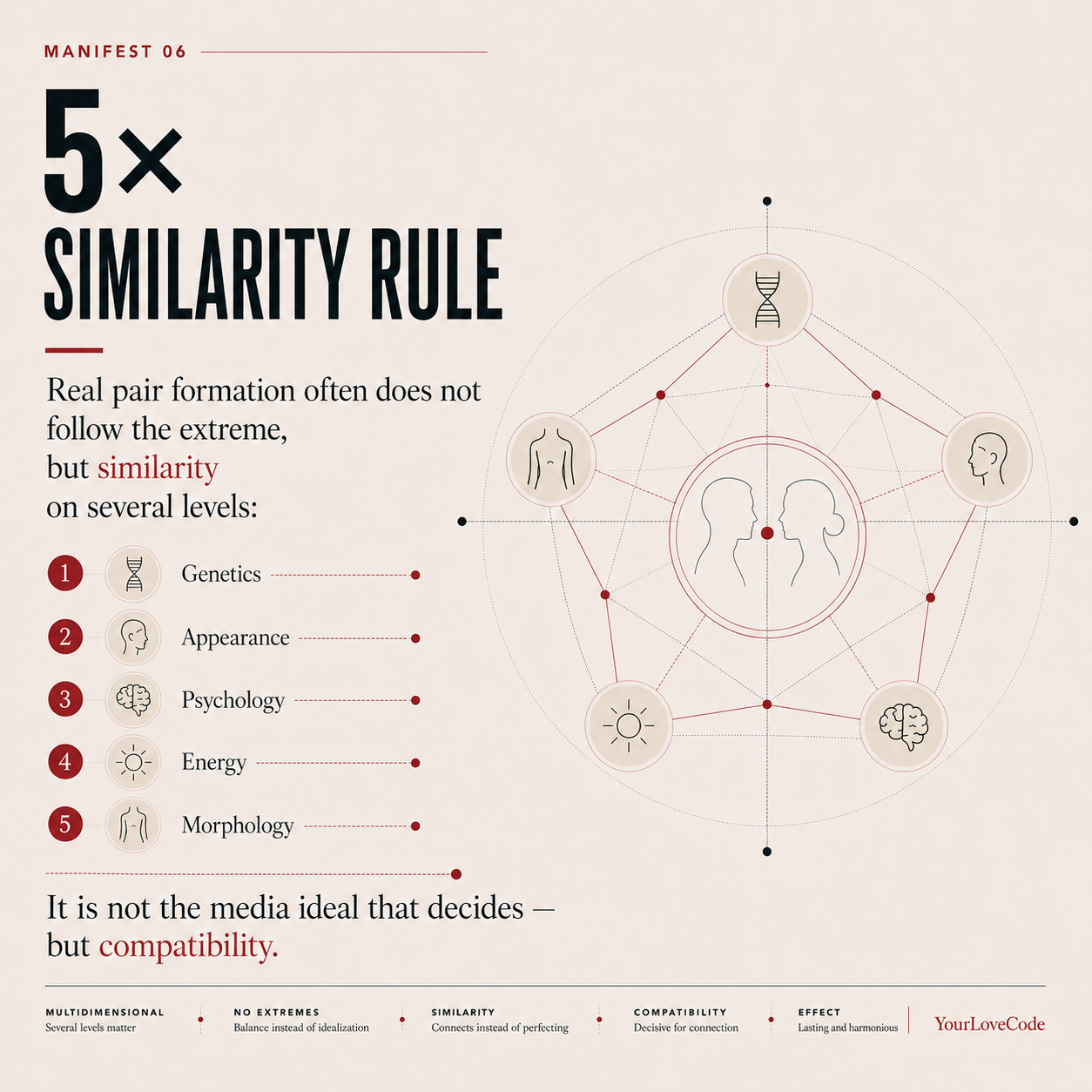
The 5× similarity rule
Partner formation does not arise from one single signal. It arises from several layers of alignment.
From the YourLoveCode perspective, genetics, appearance, psychology, energy and morphology all count. It is not the extreme that decides, but similarity on several levels.
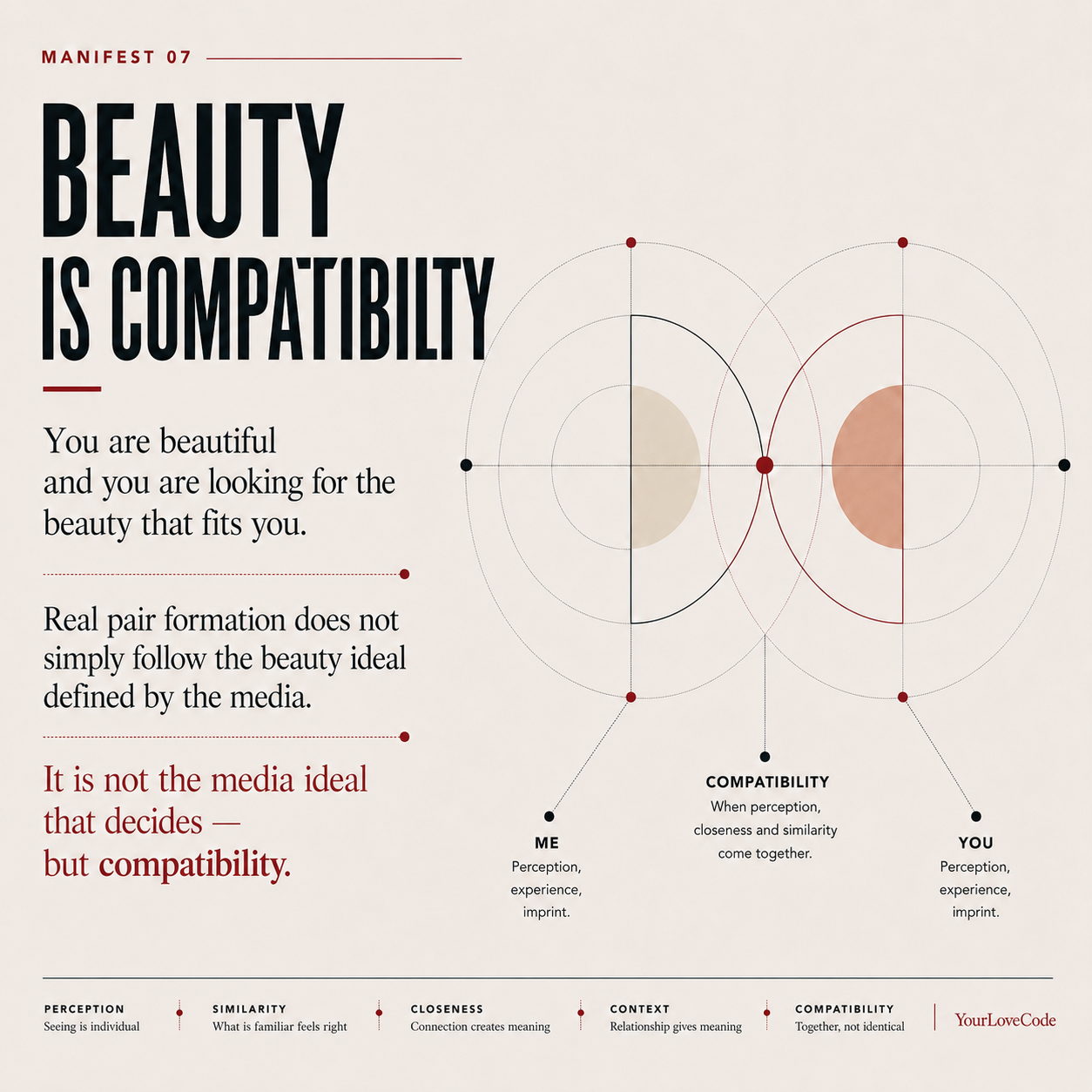
Beauty is compatibility
You are beautiful and you are looking for the beauty that fits you.
Real partner formation does not simply follow the beauty ideal defined by the media. It is not the media ideal that decides — but compatibility.
This is not a devaluation of other forms of beauty, but a different reading: in real relationships, beauty is not ranked universally, but becomes visible relationally.
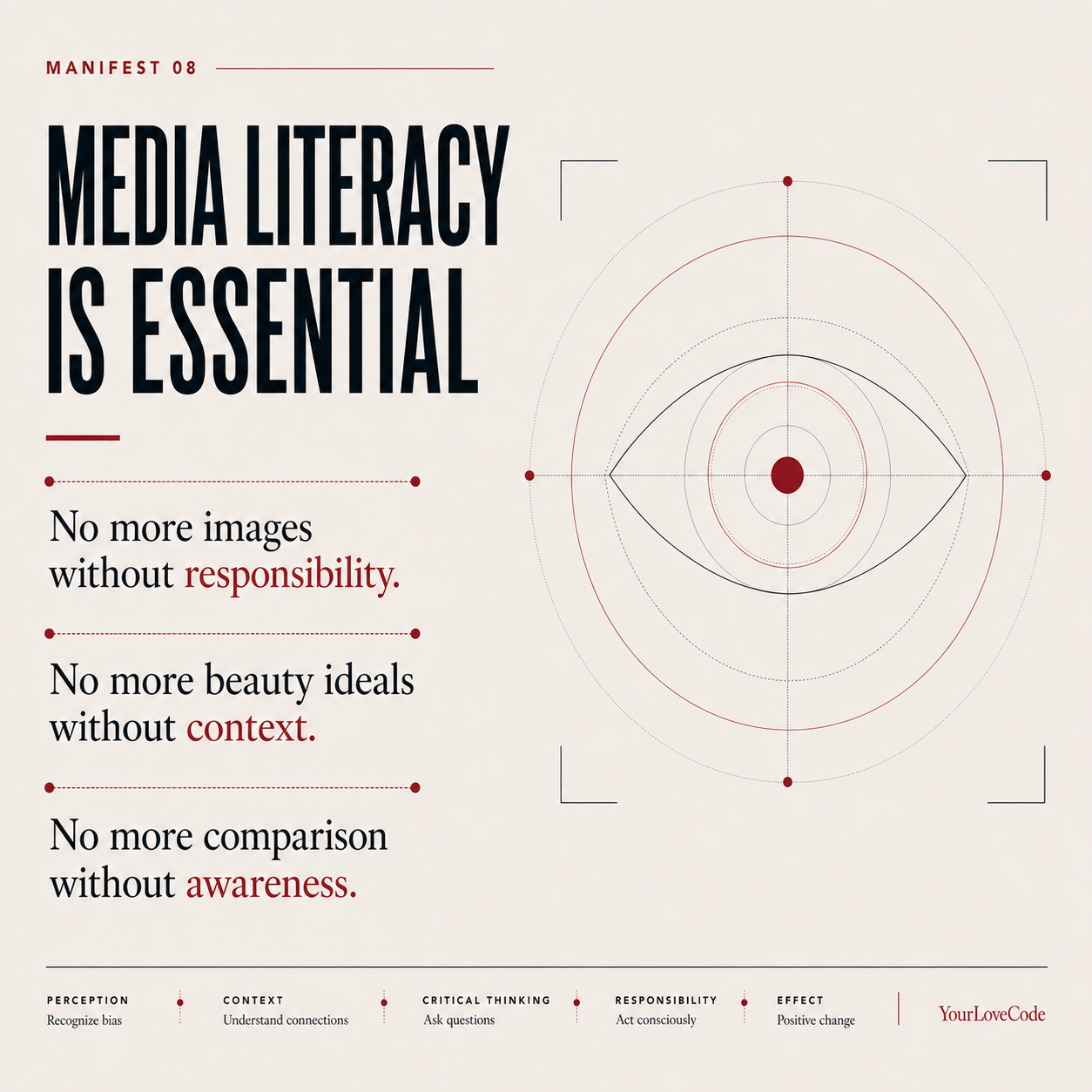
Media literacy is necessary
Media literacy does not mean rejecting media. It means being able to contextualize images, beauty ideals and comparisons.
No more images without responsibility. No more beauty ideals without context. No more comparison without awareness.
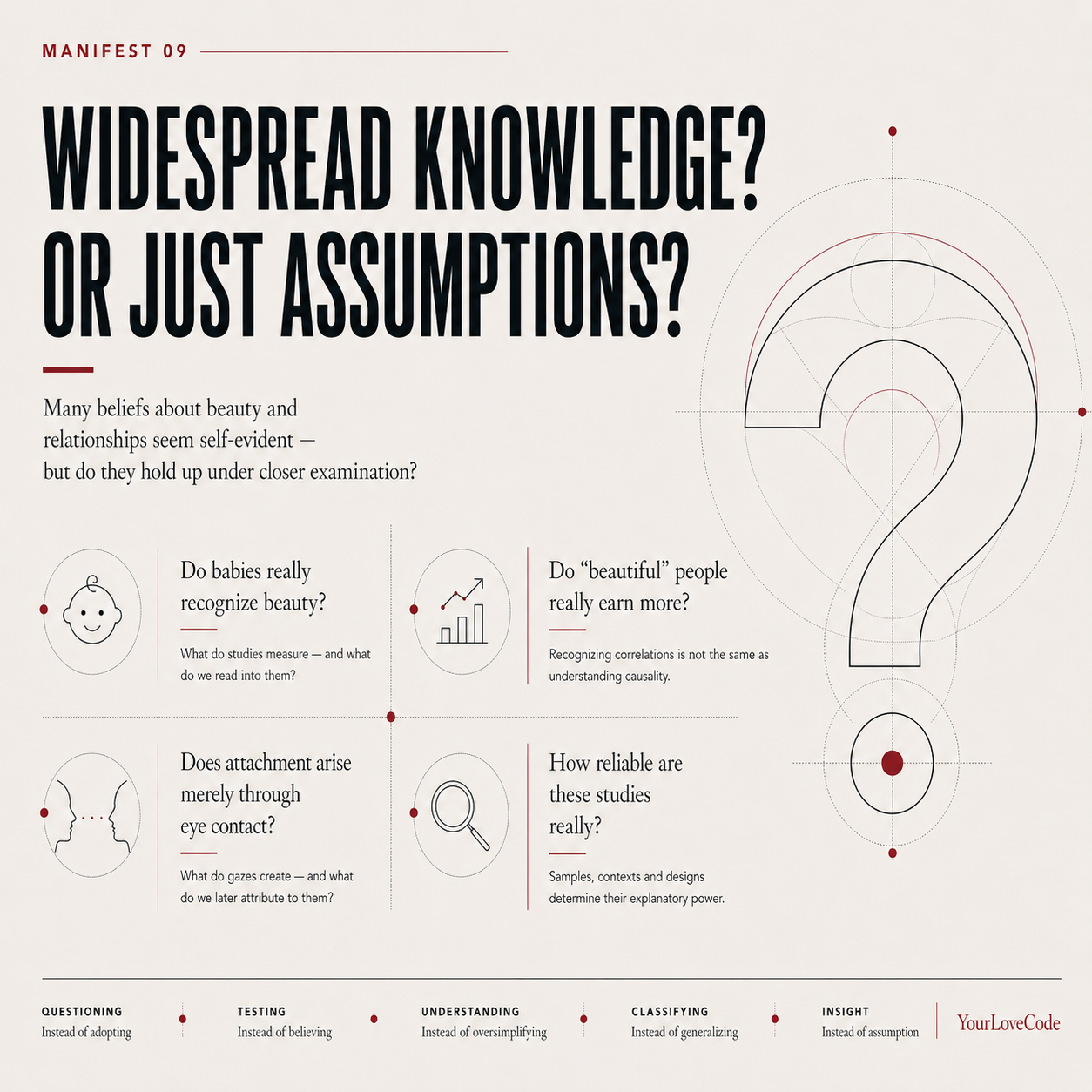
Common knowledge? Or only assumptions?
The article asks questions of common knowledge about beauty and relationships. It asks whether we really interpret studies, correlations and cultural narratives correctly.
It questions, among other things, the idea that babies recognize “true beauty”, that beautiful people automatically earn more, or that bonding arises through mere eye contact.
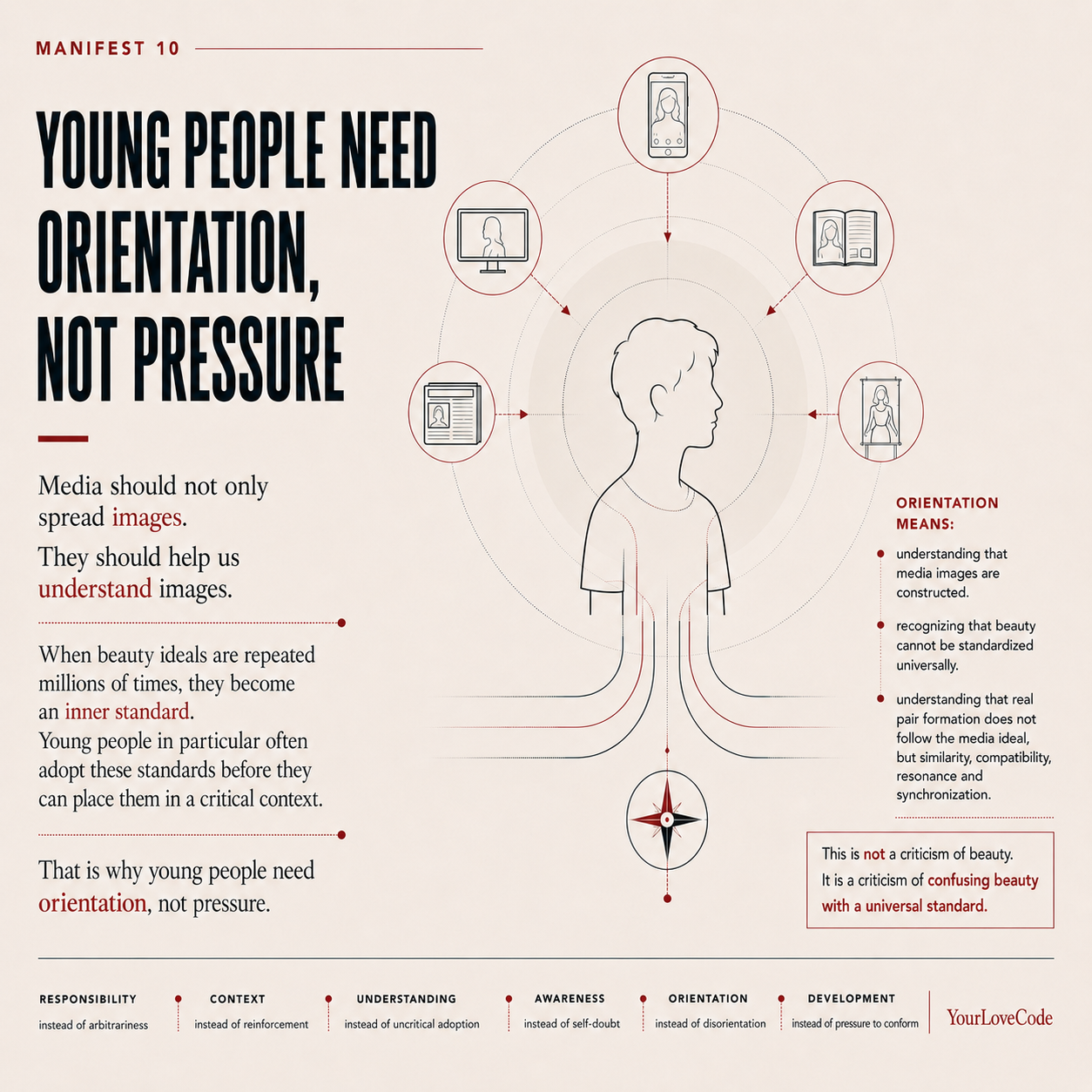
Young people need orientation, not pressure
Media should not only spread images. They should help people understand images.
When beauty ideals are repeated millions of times, they become an inner standard. Young people in particular often adopt this standard before they can critically contextualize it.
That is why young people need orientation, not pressure. This is not a critique of beauty. It is a critique of confusing media-defined beauty with a general standard. Real pair formation does not mean making compromises on beauty; rather, it shows that beauty does not function as a universal ranking, but becomes visible between two people as mutually fitting beauty — individually, intuitively, and carried by similarity, compatibility and resonance.
Source article
Why the original article remains important
The 10 manifest graphics provide orientation. The following source article remains the full argument behind them.
It documents the original connection between media influence, beauty ideals, partner formation, the 5× similarity rule and real compatibility.
Read the full source article
Full source article
The Truth About Beauty Ideals, Partner Formation – The 5× Similarity Rule and the New Paradigm?
Introduction
The truth about beauty ideals and partner formation – The 5× similarity rule
The YourLoveCode team has uncovered a truth about real partner formation: couples come together according to the 5× similarity rule, not according to the beauty ideals promoted by the media. After thousands of comparative tests of synchronicity energy (SE), we found that partners are selected according to physical similarity, especially facial similarity. Genetic similarity also plays a role in partner choice.
Changing beauty ideals: Beauty ideals are culturally and historically conditioned: from the fuller bodies of the Baroque to the thin figures of the 1960s, such as Twiggy. Today, social media in particular shapes beauty standards and has enormous influence on people’s self-image. Platforms such as Instagram and TikTok spread ideals that correspond to only a small part of the population.
This can lead to negative psychological consequences for many people, especially children and young people: low self-esteem, depression and, in extreme cases, suicidal thoughts.
Why do beauty ideals affect us so strongly? Beauty ideals often have a destructive effect on self-image. Only about 2–5% of people correspond to strict media-defined facial beauty standards. Comparing oneself with unattainable ideals leads many people to insecurity and to the feeling of not being good enough — whether in dating, work or everyday life.
Studies and observations:
- Studies indicate that physical similarity and even genetic similarity can play a significant role in partner choice.
- Researchers found that people with similar DNA tend to choose partners who are physically similar to them, a phenomenon YourLoveCode describes as synchronicity energy.
Conclusion: Media often define beauty ideals for economic reasons, but actual partner formation is based on other mechanisms, including physical and energetic similarity. It is important to understand these mechanisms and to distance ourselves from unrealistic beauty ideals. Media literacy should be strengthened in order to reduce destructive effects on self-image.
Full text
The YourLoveCode team has succeeded in uncovering a truth about real partner formation, which clearly follows different rules than those commonly known. We conducted several thousand comparative tests of couples in relation to their synchronicity energy (SE) and found that partners are selected according to the 5× similarity rule.
Why understanding the real mechanisms of partner formation today — mechanisms that function differently from how they are often portrayed in the media — is of great importance for Western society is explained below.
What is considered beautiful depends on the spirit of the time and the culture in question. Even within one culture, beauty ideals differ. Blonde hair was considered beautiful in ancient Rome; in the Baroque era, bodies became fuller again. A fuller backside even became a beauty ideal. But that trend did not last. In the 1920s, women appeared androgynous: with bobbed hair and flat chests.
From the 1950s onward, media began shaping beauty ideals and presented faces such as Elvis Presley, James Dean, Grace Kelly, Marilyn Monroe, Audrey Hepburn or Romy Schneider as beautiful. Ten years later, narrow hips became particularly desirable, and the extremely thin model Twiggy conquered the fashion world. Men wore long hair at that time.
At that time, the direct influence of media-promoted beauty ideals was relatively small compared with today’s rapidly increasing negative effect on society.
The rapid growth of digital platforms and their advertising power illustrates their deep effect on the global flow of information in all areas of life, including the definition of beauty ideals. This contributes to negative consequences for the mental health of many people, including children.
Why is this so?
Beauty ideals spread through film, fashion, television and social media tend to be very specific and often unattainable. Only a relatively small share of people in the Western world corresponds to these ideals.
- About 2–5% of people correspond to strict facial beauty ideals. The media ideal of facial beauty is often characterized by clear skin, symmetrical features, full lips, a straight nose and large expressive eyes.
- Only about 5–10% of people correspond to strict beauty ideals that include broader characteristics such as certain body shapes, skin tones, hairstyles and facial features.
The real problem does not lie in media-defined beauty standards themselves, but in how we deal with these images, messages and transmitted knowledge. Almost all of us — around 95% — do not correspond to the facial beauty ideal.
- We consciously or unconsciously compare ourselves, and often also our children, with media-promoted beauty ideals.
- If we or our children do not fit this image, insecurity can be projected inward or outward.
- The message can be interpreted as: I am a second-class person.
- I will have less success in dating.
- I will not get an exceptional job, and so on.
In this way, media play a decisive and often destructive role in the human psyche when they promote beauty ideals without context.
The knowledge an average Western European or American has about partner formation usually comes from a mix of cultural norms, media consumption, social expectations and personal experience. This knowledge consciously or unconsciously influences decisions and behavior in relationships.
Why do we so often believe statements that are primarily spread for economic reasons and often with insufficient knowledge? The article discusses several popular assumptions:
- People learn what is “beautiful”. Some studies with babies suggest that very young infants look longer at faces adults describe as attractive. From our perspective, this thesis is questionable. The number of studies is relatively small, and the term “innate” may be speculative.
- Two minutes of eye contact are enough. Eye contact can certainly create closeness, but only when the people involved also fit energetically.
- Beautiful people earn more and get better jobs. There are too few studies to accept this thesis as a universal truth. Its apparent plausibility is strongly linked to media, fashion, film and influencer culture.
- Beautiful people have more dating opportunities. This is especially true in large dating platforms, where visual selection and economic distribution models dominate.
- Many people feel pressured to meet certain beauty ideals. Social media strongly influences self-image, self-worth and behavior.
- Snapchat dysmorphia: constant editing of selfies according to social media beauty ideals can contribute to self-doubt, depression, social withdrawal and even suicidal thoughts.
- Biological and neurological processes: falling in love involves dopamine, adrenaline, endorphins, cortisol and changes in testosterone, but these processes alone do not explain stable partner formation.
- Evolutionary psychology: claims about inherited preferences and “stone-age psychology” are often repeated, but not sufficiently proven as an explanation for real partner formation.
- Beauty ideals are strongly promoted by film and music industries, where love plays a formative role.
- Art sometimes promotes a more democratic form of beauty ideals.
- Negative effects on children and young people: body dissatisfaction and low self-esteem can develop early and may lead to long-term mental health problems.
Children can be negatively affected by beauty ideals at a very young age. Parents, educators and society should therefore help promote a healthy body image and protect children from harmful effects. Here too, media literacy is essential.
YourLoveCode has identified a different logic behind real partner formation. After thousands of comparative tests of synchronicity energy, we found that partner choice follows the 5× similarity rule:
- The choice of a life partner is primarily based on physical similarity, especially facial similarity.
- We choose spouses with similar DNA. Married couples are genetically more similar to each other than two randomly selected individuals from the same population group.
- Research on doppelgängers found that people who look similar do in fact share genetic similarities.
- Sigmund Freud expressed a similar idea on a psychological level: we do not meet by chance; we meet those who already exist in our subconscious.
- YourLoveCode’s premium analysis compares energetic and structural similarity through a mathematical-statistical concept.
A small media elite tries to impose a so-called beauty ideal on millions of people worldwide, although this ideal turns out to be misleading when it comes to partner choice. It is time to clarify the real reasons for partner formation and, indirectly, to question the concept of beauty.
Through a mathematical-statistical concept based partly on facial comparison and energy matching, we found:
- There is no single universal form of facial beauty and no universal energy that fits everyone.
- Facial symmetry matters, but not in the way media often suggest. Potential couples tend to have symmetrical, meaning similar, faces. The higher the similarity, the better the fit.
- Relationships often develop according to archaic mechanisms. Unconscious perception plays a fundamental role.
- You are beautiful and you are looking for the beauty that fits you.
- You can find a partner with whom you can enter a state of energetic resonance when your energies flow in synchrony and your faces are structurally similar.
The quote by Nobel Prize winner Wisława Szymborska — “Here we are, naked lovers, both beautiful in their eyes” — points to the need to explain what “beautiful in their eyes” really means.
About 95% of the human population must somehow justify themselves internally in relation to beauty ideals represented by roughly 5% of people if they do not see themselves, or their partner, as fitting that ideal.
In media, the question often appears: “How would you rate your attractiveness on a scale from 1 to 10?” A large part of the Western population already has difficulty answering this question.
From a mathematical-statistical perspective, without devaluing anyone, it may be assumed that within real beauty models 1 fits 1, 2 fits 2, 5 fits 5 and 10 fits 10 — provided that the similarity of the couple is actually at the necessary level.
As Albert Einstein said: “The world as we have created it is a process of our thinking. It cannot be changed without changing our thinking.” It is therefore time for all media to promote more media literacy.
Sources
- Psychologie Heute, January 1997
- University of Colorado Boulder, May 19, 2014
- Josep Carreras Leukemia Research Institute, Barcelona
- Sigmund Freud
- YourLoveCode premium analysis
- ChatGPT
- Wikipedia
- Deutschlandfunk Kultur, 2019
Further reading
Connection to the wider YourLoveCode framework
This manifest does not stand alone. It connects with central YourLoveCode texts about love, perception, media influence and the deeper mechanisms of real partner formation.
The truth about beauty ideals, couple formation - The 5xSimilarity rule and the new paradigm?
September 06, 2024
The truth about beauty ideals, couple formation - The 5xSimilarity rule and the new paradigm?
Introduction
The Truth about Beauty Ideals and Partner Selection – The 5x Similarity Rule
The YourLoveCode team has uncovered the truth about partner selection: couples come together based on the 5x Similarity Rule, not on the beauty ideals promoted by the media. Through thousands of tests on Synchrony-Energy (SE), we discovered that partners are chosen based on physical similarity, particularly in their faces. Genetic similarity also plays a role in partner selection.
Changing Beauty Ideals: Beauty ideals are culturally and temporally determined. From the full-bodied figures of the Baroque period to the thin figures of the 1960s, like Twiggy. Today, social media especially shapes beauty standards and has a huge impact on people’s self-image. Platforms like Instagram and TikTok spread ideals that only a small portion of the population fits into. This leads to negative psychological effects on many people, especially children and adolescents, including low self-esteem, depression, and in extreme cases, even suicidal thoughts.
Why Do Beauty Ideals Influence Us So Strongly? Beauty ideals often have a destructive impact on our self-image. Only about 2-5% of people meet the strict media beauty standards. Comparing oneself to unattainable ideals leads many to feel insecure and not good enough, whether in dating, the job market, or everyday life.
Studies and Findings:
- Studies show that physical similarity, and even genetic match, play a key role in partner selection.
- Researchers found that people with similar DNA tend to choose partners who are physically similar, which the YourLoveCode team describes as “Synchrony-Energy”.
Conclusion: The media often define beauty ideals based on economic interests, but actual partner selection is based on other mechanisms, such as physical and energetic similarity. It is important to understand these truths and free ourselves from unrealistic beauty ideals. Media literacy should be promoted to minimize the destructive influences on self-image.
Full Text
The YourLoveCode team has managed to uncover the truth about real partner formation, which clearly follows different rules than previously known. We have conducted thousands of comparison tests on couples regarding their Synchrony-Energy (SE) and found that we choose partners based on the 5x Similarity Rule.
Why understanding the true mechanisms of partner formation today, which are 100% different from what is depicted in the media, is of great importance to our Western society, we explain in our exposition.
What is considered beautiful depends on the zeitgeist of each culture. Even within a culture, beauty ideals differ. Blonde hair was considered beautiful in ancient Rome, while in the Baroque period, bodies became fuller. A large buttocks became the beauty ideal, but this trend didn’t last long. In the 1920s, women appeared androgynous, with bobbed hair and flat breasts.
From the 1950s, the media began shaping beauty ideals, postulating faces like those of Elvis Presley, James Dean, Grace Kelly, Marilyn Monroe, Audrey Hepburn, or Romy Schneider as beautiful. Ten years later, hips became particularly narrow, and the super-thin model Twiggy took over the fashion world. Men at the time wore long hair.
Back then, the direct influence of media-propagated beauty ideals was relatively low compared to the rapidly increasing negative impact on society today. (For instance, Facebook-2020 had over 2.7 billion monthly active users, Instagram-2018 had 1 billion, Twitter-2020 had 330 million, TikTok-2021 had 1 billion, and YouTube had over 2 billion. Advertising revenue in 2019 amounted to over 15 billion USD).
These numbers highlight the rapid development of digital platforms and their profound impact on the global flow of information in all areas of life, including the definition of beauty ideals. This contributes the most to the negative consequences for the mental health of many people, including children.
Why Is This So?
“The beauty ideals propagated by films, fashion, television, and social media tend to be very specific and often unattainable. Only a relatively small proportion of people in the Western world match these ideals:
- About 2-5% of people fit the strict facial beauty ideals. The media beauty ideal often features clear skin, symmetrical facial features, full lips, a straight nose, and large, expressive eyes. Studies on facial attractiveness show that such idealized features are relatively rare in the population.
- Only about 5-10% of people fit the strict beauty ideals, which include broader features like certain body shapes, skin tones, hairstyles, and facial features.”
The actual problem is not in the beauty standards defined by the media, but in how we deal with these images, messages, and the knowledge conveyed. Apart from the fact that the media primarily define beauty ideals out of economic interests and often act out of a lack of knowledge, we humans mostly adopt these concepts. It must not be forgotten that almost 95% of us do not meet the beauty ideal (face):
- This message is true.
- We consciously or unconsciously confront the media-propagated beauty ideal with our own appearance and, if we have children, with their appearance too. If we or our children do not fit into this beauty image, we project our insecurity onto our child.
- This message indirectly tells me that I am a second-class person.
- I will be less successful in dating.
- I will not get an outstanding job, and so on.
Thus, the media play a crucial negative, even destructive role in the psyche of individuals by propagating beauty ideals.
“A typical Western European or American generally has knowledge about partner formation that comes from a combination of cultural norms, media consumption, social expectations, and personal experiences. This knowledge often consciously or unconsciously influences decisions and behaviors regarding partnerships and relationships.”
“Overall, knowledge about partner formation is shaped by a complex mix of cultural, social, biological, and personal factors, which can unconsciously influence behavior and decisions in relationships.”
Why Do We So Often Believe These Statements, Which Are Primarily Propagated Out of Economic Interests and Often from a Lack of Knowledge?
We would like to give some examples related to widely held assumptions and thus describe the general state of knowledge:
- People learn what is “beautiful”. How do people even know what is beautiful? Is there such a thing as a sense of beauty? Researchers asked this question and conducted tests with babies, as they are considered unbiased. They showed the babies photos of people deemed attractive and less attractive. It turned out that the babies looked significantly longer at photos of people who were also rated as more attractive by adults. “Overall, there are numerous studies (at least 5 to 10 significant studies) that confirm that even very young infants show a preference for faces perceived as attractive.” This research suggests that the ability to recognize attractiveness may be an innate ability that develops very early in life.
From our perspective, this thesis is questionable. The number of studies conducted seems relatively small. We would rather call innateness speculative, as the beauty ideal could be transferred from the mother to the child during pregnancy.
How powerful can this knowledge be on us if even a baby knows what is beautiful and not beautiful?
- Two minutes of eye contact are enough. Early imprints could cause us to keep falling in love with what we know and associate with positive feelings. A US study also suggests that looking deeply into each other’s eyes can help. In the experiment, participants had to look into each other’s eyes for two minutes. The effect: romantic feelings of affection. This is certainly true, but only if the people also energetically match well.
- Beautiful people earn more and get better jobs compared to those who are not considered beautiful. There are too few studies to recognize this thesis as true. Clearly, this assumption could be obvious, as their representatives are more likely to meet beauty ideals and this applies to areas like runways, fashion magazines, films, and media (such as YouTube with well-known influencers, Facebook, Instagram, and TikTok). It must not be forgotten that these people have a strong influence on the definition of beauty ideals now, more than ever.
- Beautiful people have more opportunities in dating than those who do not conform to the beauty model. This thesis is especially true for large dating agencies, as they have established beauty optics and their own economic distribution model.
- Many people feel pressured to meet certain beauty ideals – women twice as often as men. Above all, social media and the media, in general, influence our self-image, self-esteem, and often even our behavior by propagating beauty ideals.
- In 2018, researchers at Boston University School of Medicine described a new disease related to social media-induced self-doubt: “Snapchat Dysmorphia.” This can result from constantly editing selfies to match the beauty ideals spread on social media. The consequences are depression, social withdrawal, or even suicidal thoughts.
This is another reason why it is important to promote media literacy.
- In general, the biological and neurological processes of people are relatively well known: When a person falls in love, various messenger substances cause euphoria (dopamine), excitement (adrenaline), intoxicating feelings of happiness and deep well-being (endorphin and cortisol), as well as increased sexual desire (testosterone decreases in men, increases in women). Gradually (according to the WHO, at most after 24 to 36 months), this sensory “intoxication state” in the brain ends.
- According to evolutionary psychologists, both women and men are guided by preferences in partner selection that have been inherited from our ancestors over millions of years. This “stone age psyche” is supposed to make women react to strong or high-status protectors, while men are attracted to young, pretty women. Beauty apparently serves both genders as an indicator of “healthy genes.” It has been extensively researched which physical traits are considered attractive by both genders (“averageness” as an ideal). Although this knowledge is repeated frequently, it is not sufficiently proven.
- Beauty ideals are also strongly propagated by the film and music industries, where love plays a defining role.
- Negative effects on children and adolescents:
- Body dissatisfaction: Children can develop dissatisfaction with their bodies at a young age, leading to long-term problems such as low self-esteem, eating disorders, and other mental health problems.
- Self-esteem: Self-esteem can be strongly influenced by the perception of one’s appearance and comparison with idealized images and peers. Children can be negatively affected by beauty ideals at a very young age. It is important for parents, educators, and society to take action to promote a healthy body image and protect children from the harmful effects of the beauty cult.
Again, it is important to promote media literacy.
By propagating beauty ideals, the media play a destructive role in the mental and overall health of individuals. Therefore, it is important to strengthen media literacy.
The YourLoveCode team has succeeded in revealing the truth about the actual formation of couples, which clearly follows different rules than those previously known. We have conducted thousands of comparison tests of couples in relation to their Synchrony-Energy (SE) and found that we choose our partners according to the 5x Similarity Rule:
- The selection of a life partner is primarily based on physical similarity. This refers mainly to facial similarity.
- We choose spouses with similar DNA. Married couples are genetically more similar to their partner than two randomly selected individuals from the same population group, according to a study by the University of Colorado Boulder (USA). Research shows that we often prefer people who resemble us in terms of religion, age, income, education level, or body type.
- A new study, published in the Proceedings of the National Academy of Sciences, shows that people are also more likely to choose partners who are genetically similar to them. The team led by Ricky Joshi from the Josep Carreras Leukemia Research Institute in Barcelona examined the DNA of doppelgangers and found that people who look similar actually share similar DNA. Our study provides a rare insight into the nature of human similarity by showing that people with similar faces share common genotypes, while they do not match at the level of the epigenome and microbiome, explains lead author Manel Esteller. “Similarity in DNA code between two people”: The DNA code of any two humans is about 99.9% identical. This means that the differences we see between people (such as appearance, skin color, etc.) result from the remaining 0.1% of the DNA. These small genetic variations are responsible for different physical characteristics and susceptibilities to certain diseases. In the study by the Josep Carreras Leukemia Research Institute, which dealt with doppelgangers, 16 pairs of people who were considered doppelgangers because they looked very similar were studied. This study found that despite their physical similarity, the genetic match between these doppelgangers averaged only about 19%. For comparison: identical twins have a 100% match, while unrelated individuals typically have a significantly lower match, often below 1%. The 19% genetic match among the doppelgangers is thus higher than between random individuals but far from the genetic match found in real twins.
- Sigmund Freud formulated it differently, but in a similar way on another level, by referring to the psychological aspects of similarity: “We do not meet each other by accident. We only meet those who already exist in our subconscious.”
- Free Premium Analysis:
A small elite in the media field tries to impose a so-called beauty ideal on millions of people worldwide, which turns out to be completely wrong when it comes to choosing a partner. It is finally time to clarify the real reasons for partner formation and to indirectly question the concept of beauty.
Through our clear mathematical-statistical concept, which calculates an energy balance between two people – based on facial comparison among other things – we have found the following:
- There is no unique form of universal facial beauty, and therefore no universal energy that fits everyone.
- Facial symmetry is important, but not in the way the media present it. Our studies show that potential couples always have symmetrical, meaning similar faces. The higher the similarity, the better they fit together. However, this has nothing to do with the beauty ideal or the golden ratio.
- It is true that relationships develop mostly according to archaic mechanisms. Unconscious sensations play a fundamental role. YourLoveCode has deciphered these unconscious aspects for those who seek to understand.
- You are beautiful and seek the beauty that matches you.
- You are capable of finding a partner with whom you can transition into a state of perfect energetic resonance. The stronger the connection, the more your energies flow in sync, and the more similar your faces are.
From the quote by Wisława Szymborska, the Nobel laureate in literature: “Here we are, naked lovers, both beautiful in their eyes – both delighted,” one can also discern a need for explanation in the statement “beautiful in their eyes”!
95% of the human population must justify themselves internally at least in connection with the beauty ideals represented by about 5% of the people when they do not perceive themselves as beautiful and are with a similarly “non-beautiful” partner.
In the media, the question often arises: “How would you rate your attractiveness on a scale from 1 to 10?” A large portion of the 95% of the Western population would already have difficulty answering this question.
One can assume that, in reality, within the framework of beauty models – without any devaluation and purely based on mathematical-statistical numbers: 1 fits with 1, 2 with 2, 5 with 5, and so on, 10 with 10, provided that the similarity of the couple is truly at the high necessary level, as described in the studies by:
- University of Colorado Boulder
- Josep Carreras Leukemia Research Institute
- Premium Analysis by YourLoveCode. In this analysis, only the mathematical-statistical concept counts. The information presented on our website, which relates to the EPR interpretation or quantum consciousness, has no direct influence on the calculated results.
Albert Einstein once said: “The world as we have created it is a process of our thinking. It cannot be changed without changing our thinking.”
It is therefore time for all media to promote media literacy.
References:
- “Psychologie Heute”, January 1997
- University of Colorado Boulder, May 19, 2014
- Josep Carreras Leukemia Research Institute, Barcelona
- Sigmund Freud
- Free Premium Analysis
- ChatGPT
- Wikipedia
- Deutschlandfunk Kultur, 2019
Featured Posts
We have been able to scientifically explore the key element of attraction and emotional bonding between people, as well as the truth about the essence of dating...
What do we really know about the true nature of love and the power of sexual attraction?
The most famous writers and poets have dealt with these themes sufficiently in their works, but there is still a lack of real understanding about the scientific aspects of these topics..
Home » The truth about beauty ideals, couple formation – The 5xSimilarity rule and the new paradigm? Home » The truth about beauty ideals, …

Empathy: Being able to empathize with other people is one of the most important human abilities. It is especially important when a person is seeking love...